

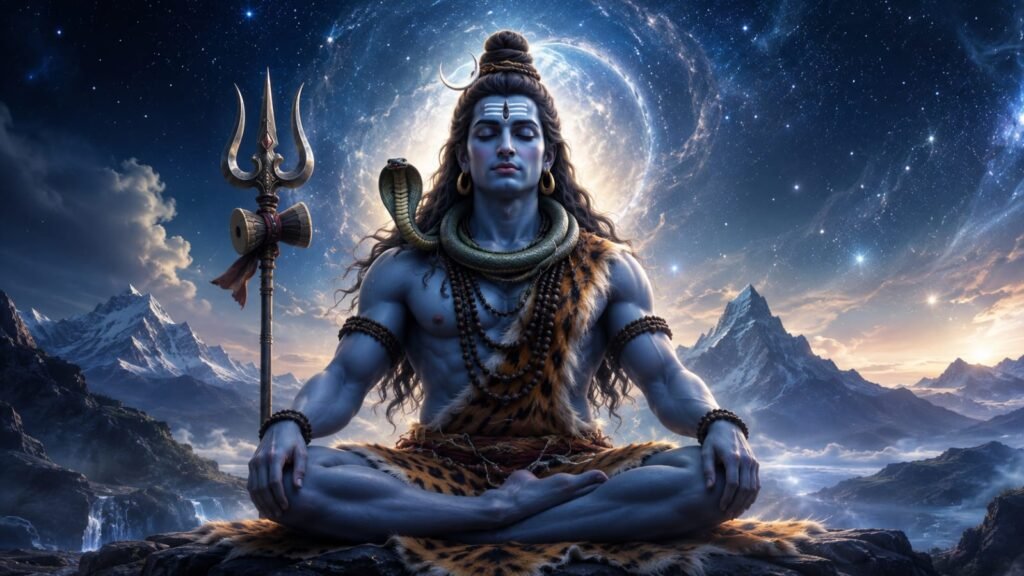
Walk into almost any Shiva temple and one image repeats itself without fail. A serpent coiled around the deity’s neck, hood raised, resting there as calmly as a garland of flowers. For many people encountering Hindu iconography for the first time, this detail can seem unsettling or strange. Yet in Hindu tradition, the snake around Shiva’s neck is one of the most carefully explained symbols in the entire mythology, and understanding why does Lord Shiva wear a snake around his neck reveals a great deal about how Hindu thought approaches fear, danger, and mastery over both.
What makes this symbol especially worth exploring is how deliberately it has been preserved across centuries of art and sculpture, from ancient temple carvings to modern calendar prints found in homes today. Unlike some details in mythology that shift or fade depending on the region or era, the serpent around Shiva’s neck has remained remarkably consistent, appearing in nearly every visual representation of him regardless of where or when it was created. This consistency suggests that the symbol was never treated as incidental decoration, but as an essential part of how Shiva’s identity is communicated, making it worth understanding in full rather than glossing over as a strange visual quirk.
Vasuki, the Serpent King Who Became Shiva’s Constant Companion
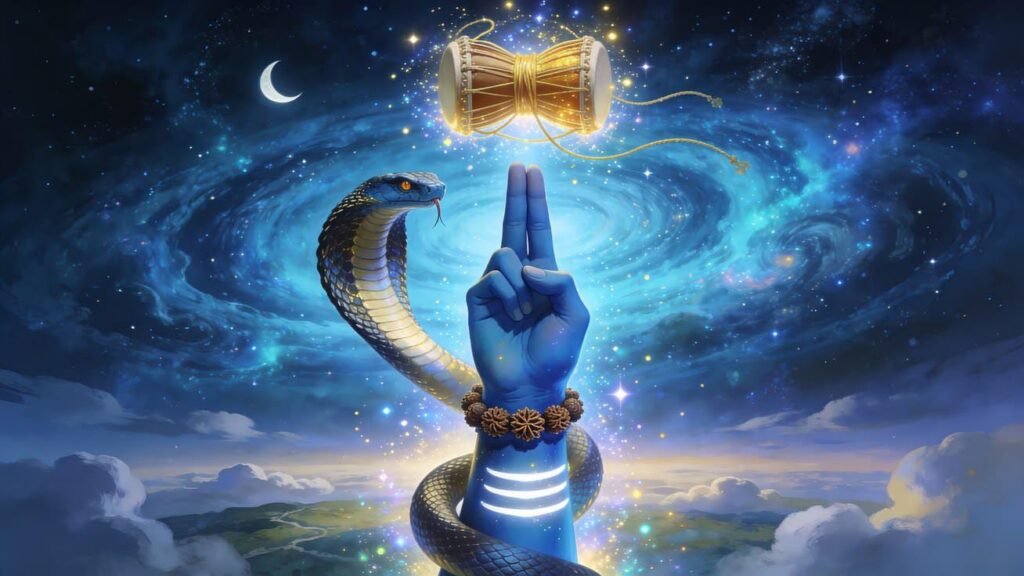
In most classical depictions, the serpent around Shiva’s neck is identified as Vasuki, one of the great Naga kings described in Hindu scriptures. According to the Puranas, Vasuki is not a minor or ordinary snake but a powerful being associated with the underworld realms known as Patala, ruled by serpent beings called Nagas. Ancient texts describe Vasuki appearing in more than one major episode of Hindu mythology, which is part of why this particular serpent, rather than any generic snake, became permanently associated with Shiva’s image.
Some scholars point out that snake worship, or Naga worship, existed in parts of the Indian subcontinent even before it was fully absorbed into mainstream Puranic Hinduism. Over time, figures like Vasuki became integrated into the stories of major deities, and Shiva’s association with serpents is often cited as one clear example of this blending of older folk traditions with classical scripture, showing how Hindu mythology has always been shaped by layers of belief rather than a single fixed source.
How the Churning of the Cosmic Ocean Bound Vasuki to Shiva Forever
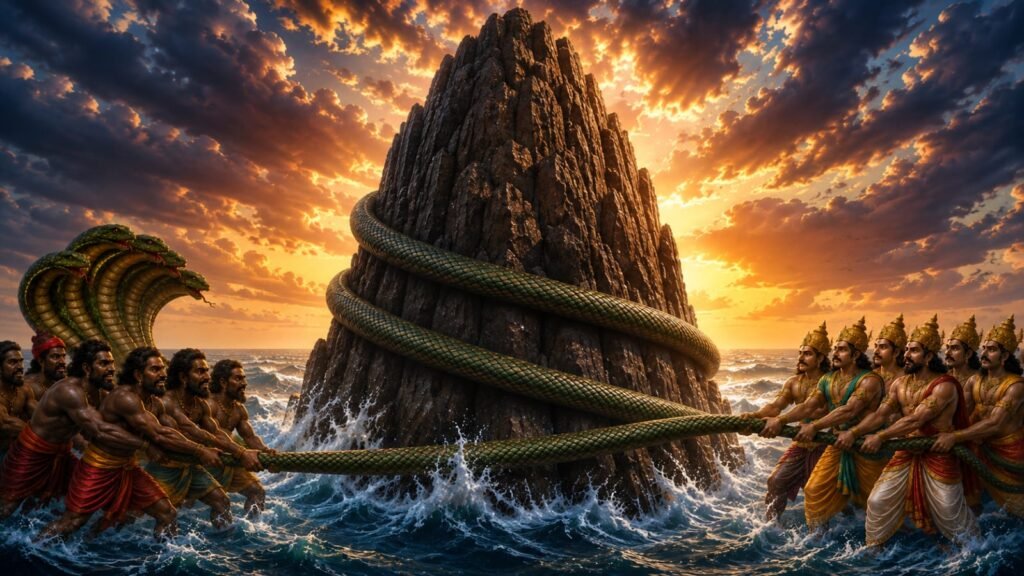
The most frequently cited story explaining Vasuki’s connection to Shiva comes from the Samudra Manthan, the churning of the cosmic ocean, described in the Bhagavata Purana and other Puranic texts. According to this story, the gods and demons used Mount Mandara as a churning rod and Vasuki himself as the rope to churn the ocean of milk in search of amrita, the nectar of immortality, wrapping the great serpent around the mountain so that both sides could pull him back and forth in a tug of cosmic proportions.
During this churning, a deadly poison called Halahala emerged from the ocean before the nectar did. This poison was so destructive that it threatened to destroy all of creation, spreading through the heavens and the earth alike before anyone could find a way to contain it. Shiva, according to the Puranas, consumed this poison to save the universe, holding it in his throat rather than swallowing it completely, which is why he is also known as Neelkanth, the blue throated one, a name that has stayed with him as a permanent reminder of that act of protection.
Many scholars believe that Shiva’s association with Vasuki grew stronger because of this shared episode. The snake that served as the churning rope during the event that nearly destroyed the world became, in later iconography, a symbol worn by the very god who saved that world from ruin, tying serpent and savior together in a single enduring image.
What Wearing a Symbol of Death Says About Shiva’s Nature
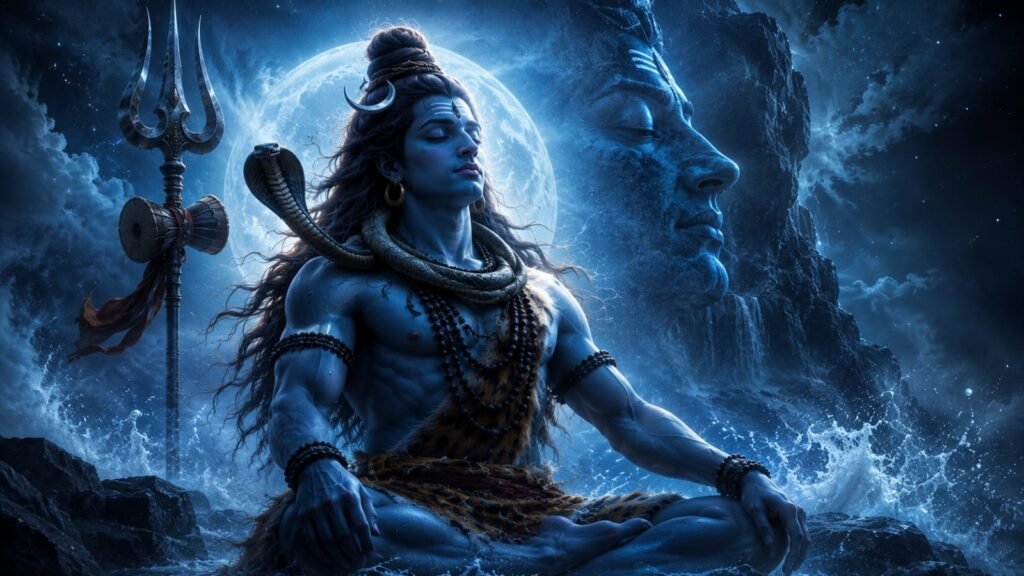
Beyond the specific story of Samudra Manthan, Hindu tradition offers several layers of symbolic meaning for why the snake appears specifically around Shiva’s neck rather than anywhere else on his body. Since the snake is closely associated with venom and death, wearing it calmly around his throat, the very place where poison would normally do its worst damage, becomes a direct demonstration of mastery over the forces that terrify most beings.
In some yogic and philosophical interpretations, the serpent is read differently, as a representation of kundalini energy or the raw ego, tamed and placed under control rather than destroyed outright. Because snakes shed their skin and appear renewed afterward, other interpretations connect the image to cyclical time and to Shiva’s broader role in cycles of destruction and renewal that run through Hindu cosmology. A further reading treats the snake as a sign that Shiva does not eliminate dangerous forces so much as hold them close, controlled but still present, reflecting a philosophical idea that destructive power cannot simply be erased, only mastered and lived alongside.
This interpretation varies depending on the school of thought, whether Puranic, Tantric, or philosophical, and readers should understand that Hindu symbolism often layers multiple meanings onto a single image rather than settling on one fixed explanation. The snake fits into a broader pattern found throughout Shiva’s iconography, where dangerous, frightening, or unconventional elements are deliberately included to show that he exists beyond ordinary fear and social convention. His blue throat from swallowing poison, his third eye capable of burning away illusion, and the ashes covering his body all work alongside the snake to build the same picture of a god who absorbs what others cannot face and turns it into a mark of quiet strength.
Regional Traditions That Cast Shiva as Protector of the Nagas
While Samudra Manthan remains the most cited explanation, other regional and Puranic traditions offer additional context for why serpents are so closely tied to Shiva. In several regional traditions, Shiva is described as a protector of the Naga communities, serpent beings who worship him with particular devotion. According to these traditions, the snake around his neck is not simply a symbol taken from one event but a sign of his relationship with Naga worshippers, who see him as their patron deity. This interpretation is more prominent in certain regional and folk traditions than in the major Sanskrit epics, and it reflects how local communities across India have long folded their own serpent worship practices into the wider figure of Shiva rather than treating the two as separate belief systems.
This blending is especially visible in parts of South India and the Himalayan foothills, where standalone Naga shrines are often found within the same temple complex as a Shiva idol, sometimes positioned so that devotees pay respects to both in the same visit. According to local tradition in these regions, Shiva is not simply tolerant of serpent worship but actively continues it, since he himself is shown adorned with the very beings that communities have honored independently for generations. Many scholars believe this arrangement reflects a broader historical pattern in Hindu religious life, where older, localized forms of worship were rarely erased by the growth of Puranic tradition, but were instead absorbed and given a place within it.
The Snake as Proof of an Ascetic Who Fears Nothing
Ancient texts describe Shiva primarily as a great ascetic, or Mahayogi, who lives apart from worldly comforts and social norms. Wearing a snake, an animal most people fear and avoid, is often interpreted as a demonstration of this ascetic fearlessness. Just as he wears ashes from cremation grounds and matted hair instead of royal ornaments, the snake reflects his rejection of conventional symbols of status in favor of symbols that show spiritual mastery instead. Where a king might wear gold and jewels to project power, Shiva wears the very creature that others recoil from, and in doing so makes a quieter, more unsettling statement about where true power actually comes from.
This portrayal also sets Shiva apart from how asceticism is sometimes imagined in other traditions, where renunciation is shown mainly through withdrawal, silence, or physical austerity alone. Hindu tradition adds a visual, almost theatrical dimension to Shiva’s detachment by placing a symbol of death directly against his skin, close enough to strike at any moment, yet entirely unthreatening to him. Many scholars believe this detail was included precisely to make the point unmistakable to worshippers, that Shiva’s fearlessness is not simply a claim made about him in scripture, but something visibly demonstrated through the very image devotees encounter every time they stand before his idol.
Why This Ancient Symbol Still Shapes Worship and Practice Today
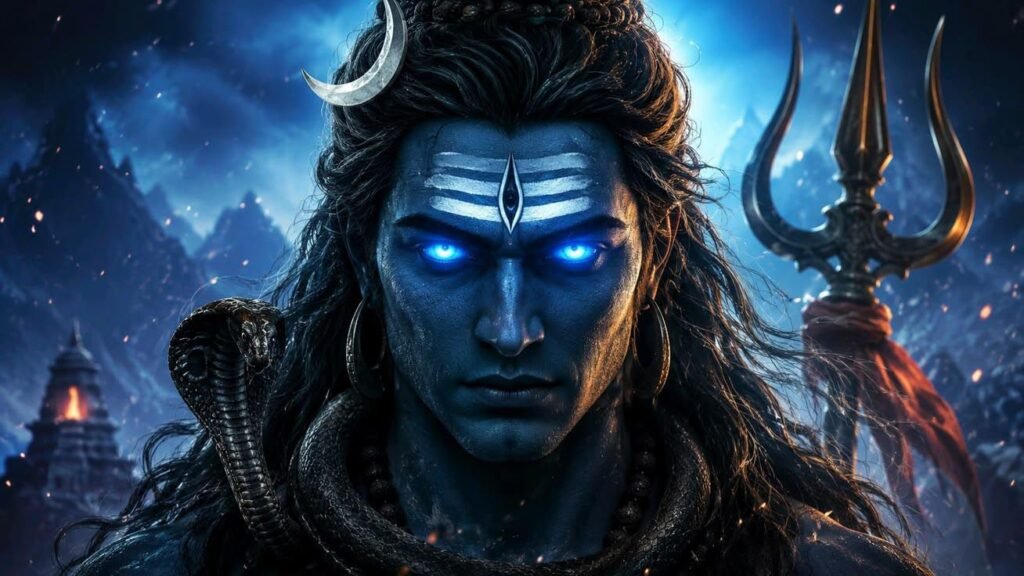
The snake around Shiva’s neck is not treated as a decorative detail in temple worship. It carries active meaning in how devotees understand Shiva’s power and approach him during festivals and daily rituals. During Nag Panchami, a festival dedicated to snake worship, many devotees also honor Shiva alongside serpent deities, reflecting the close link between the two figures in popular practice. Temple idols and images almost always retain the snake in depictions of Shiva, regardless of region, showing how consistent this symbol has remained across centuries of artistic tradition.
In yogic and Tantric traditions, teachers sometimes use the image of the snake around Shiva’s neck to explain concepts of controlled energy in meditation practice, treating it as a visual teaching aid rather than simply a mythological detail. Folk retellings in regions with strong Naga worship traditions continue to tell stories that reinforce Shiva’s protective relationship with serpent beings, keeping the symbolism alive well beyond the pages of the Puranas and embedding it into living, everyday devotion.
This continuity is also visible in how families pass the symbolism down through generations, often without any formal instruction at all. A child growing up near a Shiva temple absorbs the image of the serpent long before learning any of the Puranic stories behind it, simply through repeated exposure during festivals, home rituals, and everyday visits to the shrine. By the time the underlying stories are explained, whether through a grandparent’s retelling or a temple priest’s discourse, the symbol already feels familiar rather than foreign, which is part of why the meaning of the snake tends to deepen with age rather than being encountered for the first time as an adult.
Frequently Asked Questions
Why does Lord Shiva wear a snake around his neck?
Lord Shiva wears a snake, traditionally identified as Vasuki, as a symbol of his mastery over fear, death, and danger. According to Puranic stories, this connection grew from the Samudra Manthan, where Vasuki served as the churning rope and Shiva later consumed the deadly poison that emerged from the ocean, linking the serpent and the god within the same cosmic event.
Is the snake around Shiva’s neck always Vasuki?
In most classical iconography and major Puranic stories, the snake is identified as Vasuki. However, some regional traditions and folk retellings do not always specify a name, treating the snake more generally as a symbol of Naga worship or serpent power connected to Shiva, rather than referring to one specific individual serpent.
What does the snake symbolize in Hindu mythology overall?
Snakes in Hindu mythology often symbolize duality, they can represent danger, death, and poison, but also protection, fertility, and rebirth through the shedding of skin. In Shiva’s case, the symbolism leans toward controlled power, showing that dangerous forces are not destroyed but mastered and worn with calm confidence.
How does the Samudra Manthan story connect to this symbol?
During the Samudra Manthan, described in the Bhagavata Purana, Vasuki was used as the rope to churn the cosmic ocean. When the poison Halahala threatened to destroy creation, Shiva consumed it to protect the universe. This shared event is widely cited as the reason the same serpent later became associated with adorning Shiva’s neck in artistic depictions.
Does the snake represent Shiva’s connection to Naga communities?
According to several regional traditions, yes. Shiva is sometimes described as a patron or protector of Naga, serpent associated beings or communities, who worship him with particular reverence. This interpretation is more common in regional and folk retellings than in the major Sanskrit epics, and it adds another layer to the snake’s symbolic meaning.
Is there a difference between how Shaivism and general Hindu tradition interpret this symbol?
Broadly, most interpretations agree on the core themes of fearlessness and control over danger. However, Shaivism, the tradition centered specifically on Shiva worship, often expands on this symbolism further, connecting it to yogic concepts like kundalini energy and using it as a teaching tool in meditation and Tantric philosophy, which is less emphasized in more general Puranic retellings.
Why does Shiva wear a snake instead of removing danger entirely?
Many scholars believe this reflects a broader philosophical idea in Hindu thought, that destructive or fearsome forces are not meant to be erased but understood, controlled, and integrated. Rather than avoiding the snake, Shiva wears it calmly, symbolizing that true spiritual mastery lies in coexisting with danger rather than eliminating it altogether.
Conclusion: A Meaningful Takeaway
The snake around Shiva’s neck is not a frightening detail meant to intimidate. It is one of Hindu mythology’s clearest visual lessons in mastery over fear. Rather than depicting a god who avoids danger, Hindu tradition presents Shiva calmly wearing the very thing most beings dread, turning a symbol of death and poison into an emblem of quiet, controlled power. Understanding why Lord Shiva wears a snake around his neck ultimately asks readers to reconsider what real strength looks like, not the absence of danger, but the ability to hold it close without being consumed by it.