
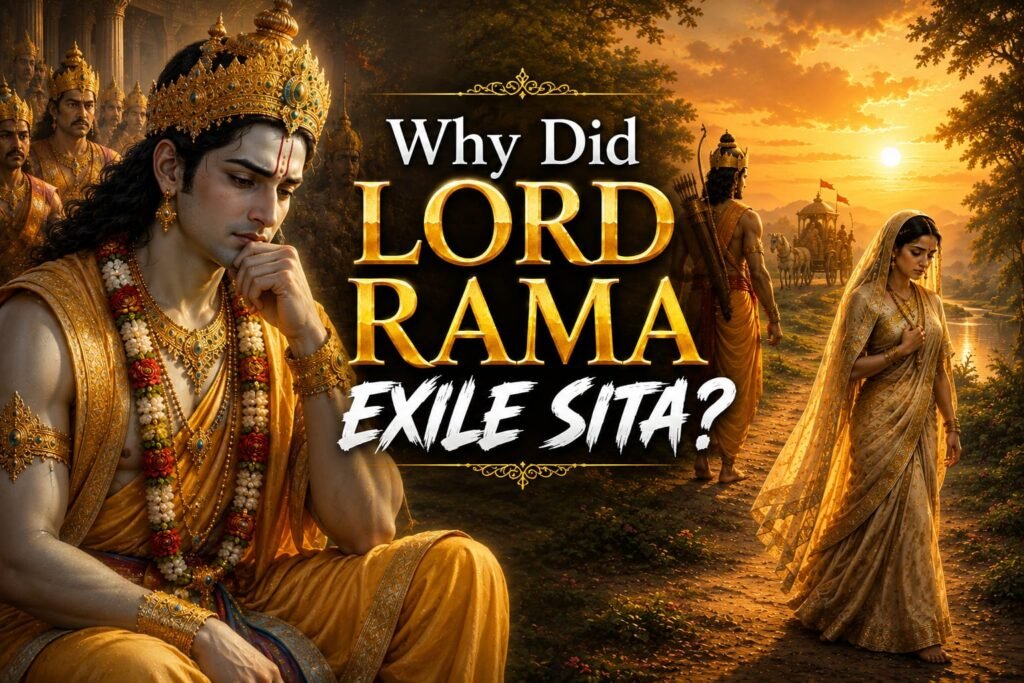
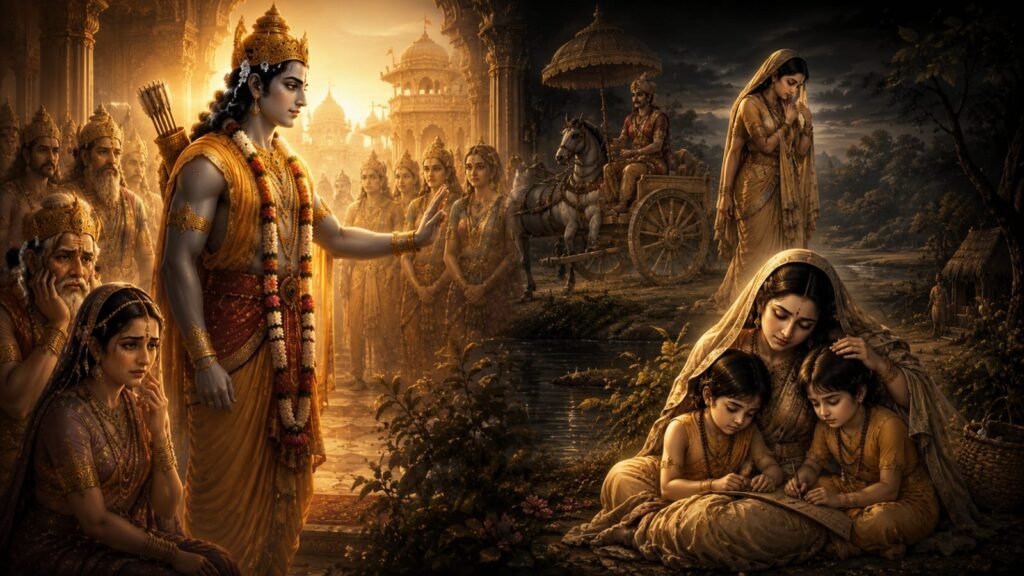
Few events in the Ramayana have generated as much discussion as Lord Rama’s decision to send Goddess Sita into exile. After defeating Ravana, rescuing Sita from Lanka, and returning to Ayodhya, many readers expect the story to end in peace and happiness. Instead, the Ramayana gives us one of its most emotional and debated episodes, where Rama and Sita are separated despite their deep love and unwavering devotion to one another.
To many modern readers, this decision is hard to make sense of. Why would Lord Rama, revered as the very embodiment of righteousness and justice, send his own wife away after everything she had endured? Was it doubt? Political necessity? Something deeper? Scholars, devotees, and commentators have debated these questions for centuries.
The answer lies largely in understanding the responsibilities of kingship in ancient India and the concept of Raj Dharma — a ruler’s duty to place the welfare and trust of the kingdom above personal emotion. The Valmiki Ramayana, along with later retellings, presents this episode as a tragic conflict between Rama’s role as an ideal husband and his responsibility as an ideal king.
After the Victory Over Ravana
After a fierce battle in Lanka, Lord Rama defeated Ravana and rescued Goddess Sita from captivity. Before returning to Ayodhya, Sita underwent the Agni Pariksha (Trial by Fire) to publicly demonstrate her purity. According to the Valmiki Ramayana, Agni, the god of fire, returned Sita unharmed and declared her completely pure, removing any doubt about her faithfulness.
Following their return, Rama was crowned king of Ayodhya, and the kingdom entered a period of peace and prosperity known as Rama Rajya. For a time, everything appeared ideal. But beneath the surface, a small number of citizens continued to question whether a queen who had lived in another man’s palace should remain on the throne, despite the divine testimony given during the Agni Pariksha.
These rumors eventually reached Lord Rama. He himself never questioned Sita’s purity — but he understood that the growing public criticism threatened the trust his people placed in their king. That conflict, between his personal belief and his public responsibility, became the foundation of one of the most heartbreaking decisions in the entire Ramayana.
The Washerman’s Remark and the Voice of the Kingdom
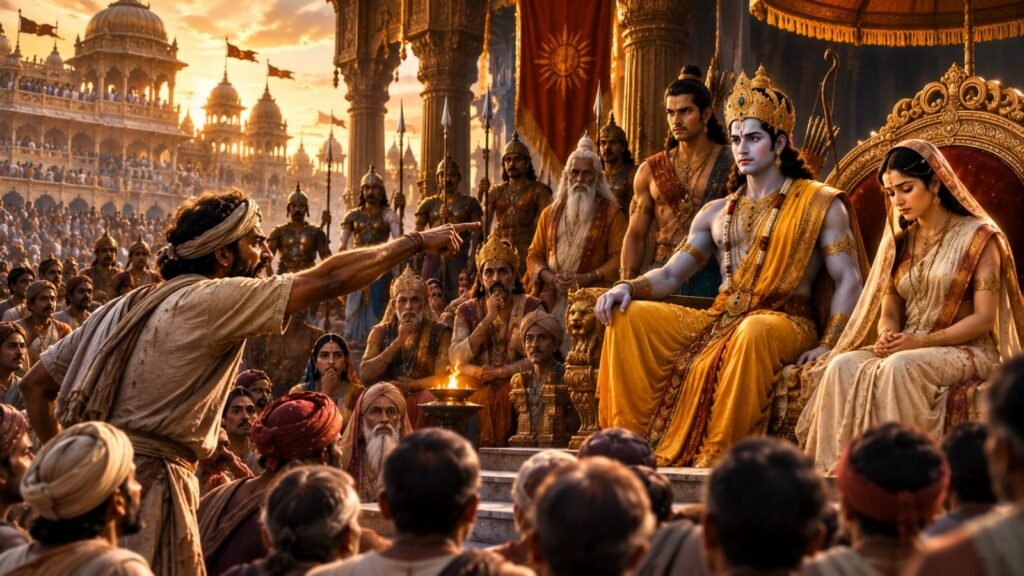
According to the Valmiki Ramayana (Uttara Kanda), the turning point came when Rama learned of a remark made by a washerman (dhobi) in Ayodhya. During an argument with his wife, the washerman reportedly said he was not like Rama, who had accepted back a wife that had lived in another man’s house. It was the opinion of one man, but it reflected doubts that had quietly begun circulating among sections of society.
When the remark reached Rama, it troubled him deeply. He had never doubted Sita’s purity — she had already proven her innocence through the Agni Pariksha, and Agni himself had declared her pure before the gods. The real challenge Rama faced wasn’t his own faith in Sita, but the possibility that his subjects might lose confidence in their king if the criticism went unanswered.
For Rama, a ruler’s reputation was inseparable from the trust of his people. As king, he believed that holding his subjects’ confidence was essential to preserving justice and stability in the kingdom. That belief placed him in an agonizing position — his duty as king pulling directly against his love and responsibility as a husband.
Raj Dharma vs Personal Happiness
One of the central themes of this episode is Raj Dharma — the sacred duty of a king to place the welfare of his kingdom above his own personal desires. In ancient Indian political thought, a ruler was expected to uphold the trust of his people even when it demanded immense personal sacrifice. The Valmiki Ramayana presents Rama’s decision within this framework, not as a judgment on Sita’s character.
Although Rama chose to send Sita away, the epic repeatedly shows his deep sorrow over the decision. He never remarried during her lifetime, nor did he replace her as queen. In many traditional accounts, he performed royal rituals with a golden idol of Sita placed beside him, a symbol that she alone remained his rightful wife despite their separation.
For this reason, many commentators describe the exile as one of the greatest personal sacrifices in the Ramayana. Rama’s decision was never framed as a victory or a moment of happiness — it was a tragic consequence of the responsibilities he believed came with righteous kingship. It remains one of the most debated episodes in Hindu tradition because it illustrates the difficult balance between personal love and public duty.
Sita’s Life in Sage Valmiki’s Ashram
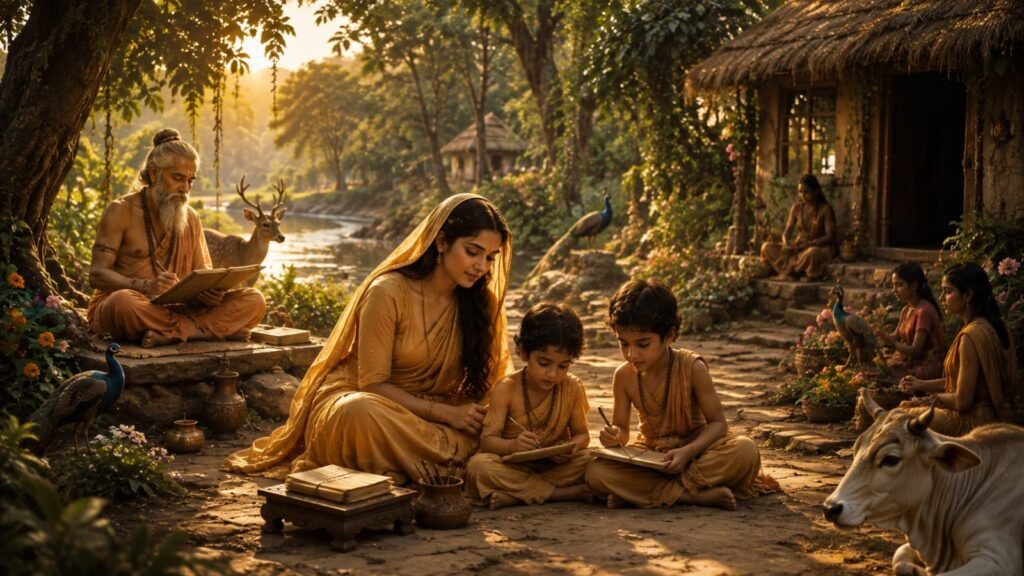
Following Rama’s instructions, Lakshmana escorted the pregnant Sita to the forest and left her near the hermitage of Sage Valmiki. According to the Valmiki Ramayana (Uttara Kanda), Valmiki welcomed Sita with compassion, aware of both her innocence and her suffering. Far from the royal comforts of Ayodhya, Sita found peace in the sage’s ashram, devoting herself to a simple, spiritual life.
It was there that Sita gave birth to her twin sons, Lava and Kusha. Under Valmiki’s guidance, the two princes received a thorough education in the Vedas, warfare, music, and righteousness. Unaware of their royal heritage, they grew into wise, courageous young warriors, while Sita raised them with love, humility, and devotion.
For many readers, this chapter highlights Sita’s extraordinary strength and resilience. Despite the separation from her husband and the burden of raising her children alone, she remained steadfast in her faith and her dignity. Her time at Valmiki’s ashram is often remembered as a powerful example of patience, inner strength, and unwavering commitment to dharma.
Lava and Kusha Reunite with Lord Rama
Years later, Lord Rama performed the Ashwamedha Yajna, a royal sacrifice symbolizing the sovereignty of his kingdom. During the ceremony, Sage Valmiki sent Lava and Kusha to Ayodhya, where they recited the Ramayana — the very epic Valmiki himself had composed. Their recitation deeply moved everyone in the royal court, including Rama, who had no idea the two boys were his own sons.
As Lava and Kusha continued their recitation, Rama slowly began to realize their true identity. He invited Sage Valmiki and Sita to appear before the royal assembly so that her innocence could be publicly affirmed once again. Valmiki declared that Sita had always remained pure and had never once wavered in her devotion or virtue.
This reunion became one of the most emotional moments in the Ramayana. It brought Rama, Sita, and their sons together again — but it also set the stage for the final, most poignant chapter of Sita’s earthly life, one that would forever shape her legacy in Hindu tradition.
Why Did Sita Return to Mother Earth?
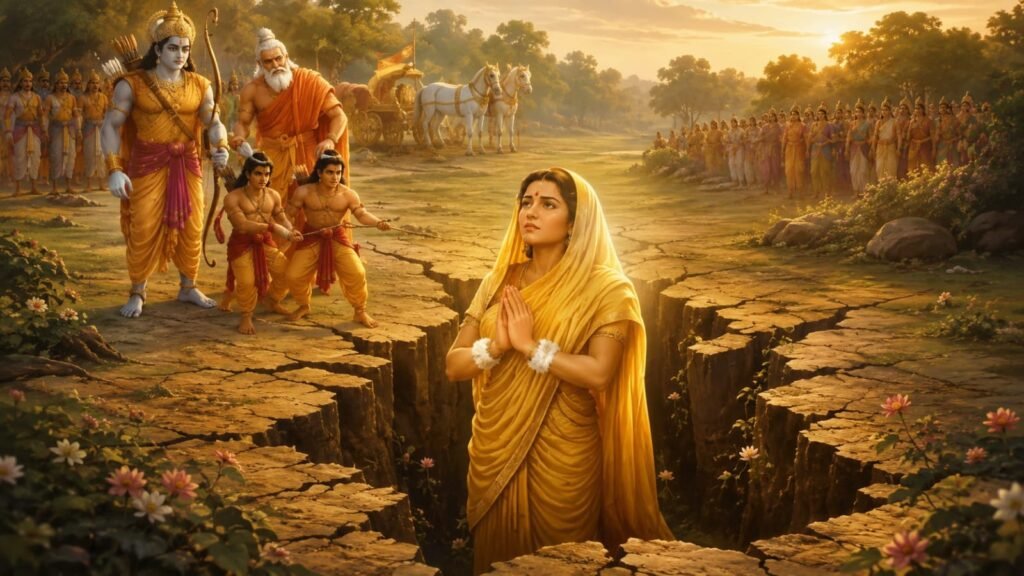
According to the Valmiki Ramayana (Uttara Kanda), Sage Valmiki publicly declared that Sita had always remained pure and faithful. Even so, Sita chose not to undergo another trial to prove her innocence before the people of Ayodhya. Instead, she prayed to Bhumi Devi (Mother Earth), asking that if she had remained devoted to Rama in thought, word, and deed, the Earth should receive her.
In answer to her prayer, the Earth opened, and a divine throne emerged bearing Bhumi Devi. She embraced Sita and took her back into the Earth, marking the end of Sita’s earthly life. The gods bore witness to this extraordinary moment, confirming once more that her purity had never truly been in question. It remains one of the most emotional and symbolic episodes in the entire epic.
For many devotees, Sita’s return to Mother Earth represents the triumph of truth and dignity. Rather than defend herself again and again against repeated public doubt, she entrusted her honor to the Earth itself — the very source from which she had originally emerged. Her departure stands as a powerful reminder that truth, in the end, stands beyond human judgment.
Did Lord Rama Ever Stop Loving Sita?
One of the greatest misconceptions about the Ramayana is that Rama abandoned Sita because he no longer loved or trusted her. The Valmiki Ramayana simply doesn’t support that reading. Throughout the epic, Rama consistently acknowledges Sita’s purity and never once accuses her of wrongdoing. His decision came from what he believed to be his responsibility as king — not from any lack of love for his wife.
Several traditions describe Rama living out the rest of his life without taking another queen. During important royal rituals, including the Ashwamedha Yajna, he is said to have placed a golden image of Sita beside him, because she alone remained his rightful queen. It was a quiet but powerful symbol of his continued devotion and the place she held in his life that no one else could fill.
For this reason, many commentators view the separation of Rama and Sita as one of the greatest personal sacrifices in Hindu tradition. Their story isn’t remembered as one of broken love, but as a tragic conflict between personal happiness and the demands of dharma — a conflict that still inspires reflection and discussion today.
Conclusion: Understanding the Exile of Sita
The exile of Goddess Sita is one of the most emotional and debated episodes in the Ramayana. Viewed through a modern lens, Rama’s decision can seem difficult to accept. But the Valmiki Ramayana presents it as a tragic conflict between two equally important responsibilities — his love and trust for Sita on one side, and his duty as king of Ayodhya on the other.
The epic makes clear that Rama never questioned Sita’s purity. She had already been declared innocent through the Agni Pariksha, and Sage Valmiki later reaffirmed her virtue before the royal court. Yet Rama believed a ruler’s personal life could never be fully separated from the confidence of his people. His decision, though heartbreaking, was guided by his understanding of Raj Dharma, not personal doubt or anger.
In the end, the story of Rama and Sita isn’t about love failing — it’s about the painful sacrifices that duty and righteousness can demand, even from the noblest of individuals. That’s why the exile of Sita remains one of the most profound and thought-provoking episodes in Hindu mythology.
Frequently Asked Questions
Why did Lord Rama send Sita into exile? According to the Valmiki Ramayana (Uttara Kanda), Lord Rama sent Sita into exile after hearing that some citizens of Ayodhya questioned her purity despite her successful Agni Pariksha. Although Rama believed in her innocence, he chose to uphold his duty as king.
Did Lord Rama doubt Sita’s purity? The Valmiki Ramayana does not state that Rama personally doubted Sita’s purity. Both the Agni Pariksha and Sage Valmiki publicly affirmed her innocence.
Who raised Lava and Kusha? Sage Valmiki welcomed Sita into his hermitage, where she gave birth to Lava and Kusha. The sage educated the two princes in the Vedas, warfare, and righteousness.
Why did Sita return to Mother Earth? After Sage Valmiki declared her innocence, Sita prayed to Bhumi Devi to receive her if she had always remained pure. The Earth opened, and Mother Earth took Sita back, symbolizing the ultimate proof of her virtue.
Did Lord Rama marry again after Sita’s exile? The Valmiki Ramayana does not describe Rama taking another wife after Sita’s exile. Later traditions also describe him performing important rituals with a golden image of Sita, symbolizing her place as his only queen.
Which scriptures describe Sita’s exile? The primary account is found in the Valmiki Ramayana, particularly the Uttara Kanda. Later retellings such as the Ramcharitmanas also narrate the episode, with some differences in emphasis.
What is Raj Dharma? Raj Dharma refers to the moral and ethical duties of a king. It emphasizes placing the welfare and trust of the kingdom above personal interests — a principle that shaped Rama’s decision according to the Ramayana.
What lesson does Sita’s exile teach? The story highlights the complexities of dharma, leadership, sacrifice, and personal responsibility. It also celebrates Sita’s courage, dignity, and unwavering faith, making her one of the most revered figures in Hindu tradition.