

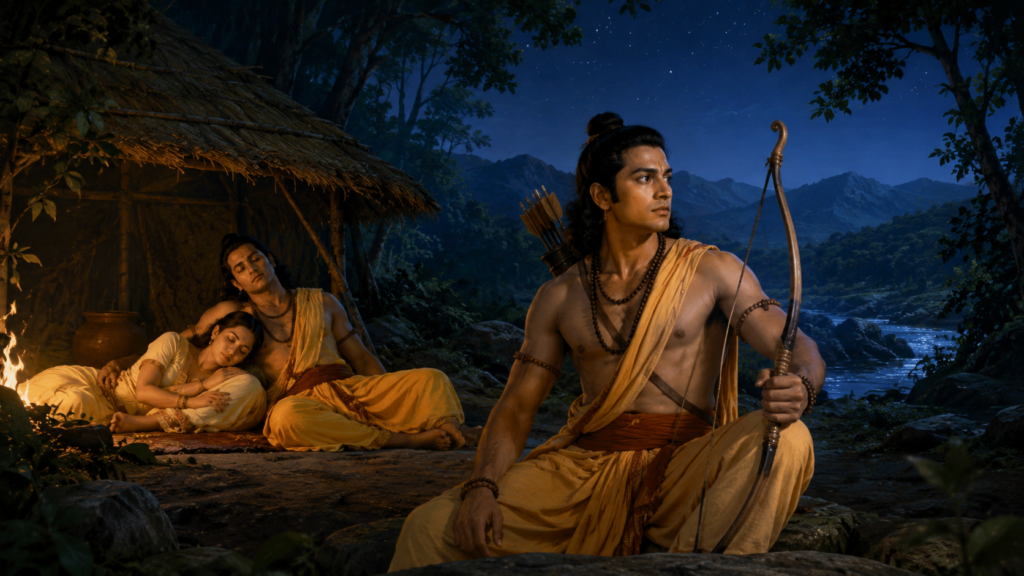
Among the many remarkable stories associated with the Ramayana, one of the most fascinating is the belief that Lakshmana remained awake throughout the entire fourteen years of Lord Rama’s exile. According to this popular tradition, he gave up his own sleep entirely so that he could guard Rama and Sita every single night, staying constantly alert against any danger that might arise while they lived in the forest.
The story has inspired generations of devotees precisely because it reflects Lakshmana’s extraordinary dedication and selfless service so vividly. It is often held up as one of the greatest examples of brotherly love found anywhere in Hindu tradition, portraying a prince who willingly surrendered his own basic comfort for the safety of the people he loved most. As a result, many people today accept this account as an established, word-for-word part of the Ramayana itself, without necessarily questioning where the detail actually comes from. An important question remains underneath all of this, though, one worth taking seriously rather than assuming away. Is this story actually described in the original Valmiki Ramayana, or did it emerge later, through devotional retellings that grew up around the epic over time? Answering that properly means looking closely at both the primary scripture and the rich tradition of storytelling that has shaped it since.
What Does the Valmiki Ramayana Say?
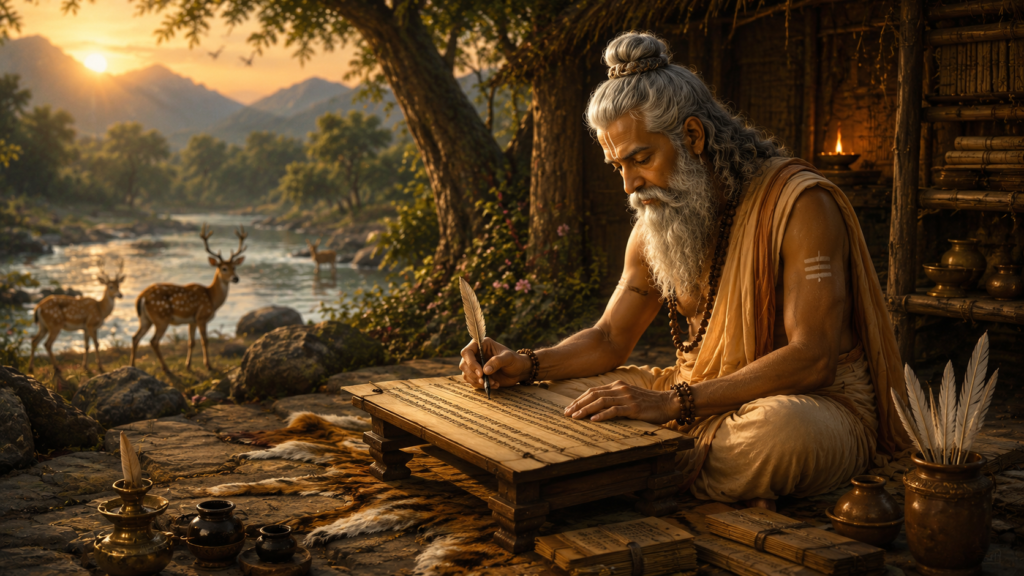
The Valmiki Ramayana, widely regarded as the oldest and most authoritative version of the epic, frequently describes Lakshmana’s unwavering devotion to Rama throughout the years of exile. He is shown protecting Rama and Sita at every turn, building forest shelters with his own hands, gathering food for the small household, and standing guard whenever the situation called for it. His dedication never once wavers across the narrative, which is part of why he remains one of the most admired figures in the entire epic.
However, the Valmiki Ramayana does not explicitly state anywhere that Lakshmana remained awake for the full fourteen years without any sleep at all. While the epic consistently emphasizes his constant vigilance and tireless service to his elder brother, it never directly claims that he completely abandoned sleep for over a decade. This distinction genuinely matters, since many modern retellings present the sleepless detail as though it appears word-for-word in the original text, when in fact it does not.
Even without this later addition, Lakshmana’s role within the Valmiki Ramayana remains extraordinary in its own right. He willingly left behind the comforts of Ayodhya, accompanied Rama into the forest without a moment’s hesitation, and devoted every part of his daily life to serving his elder brother throughout the exile. His commitment, exactly as the earliest text describes it, is already more than enough to establish him as one of the greatest examples of loyalty and sacrifice found anywhere in Hindu literature.
The Popular Story of Goddess Nidra
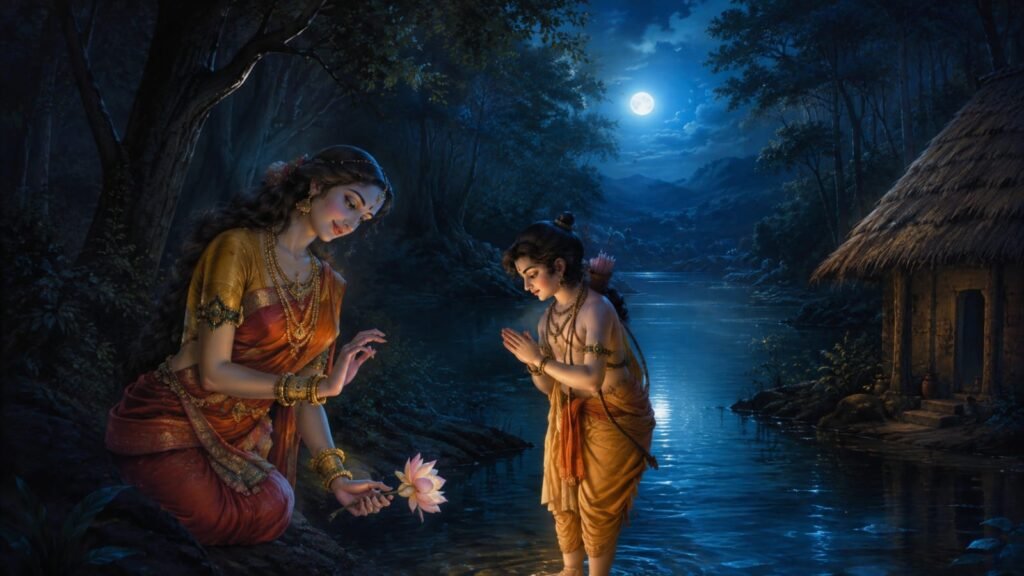
The belief that Lakshmana stayed awake for fourteen years comes primarily from later devotional traditions rather than from the original Valmiki Ramayana itself. According to this widely told story, before the exile began, Goddess Nidra, the personification of sleep, is said to have approached Lakshmana and reminded him of the natural human need for rest, expecting him to accept it like anyone else.
Lakshmana is described respectfully requesting that Nidra Devi spare him from sleep entirely until Rama’s exile had come to its end. He explained to her that his highest duty during this period was to remain awake every night specifically to guard Rama and Sita from whatever danger might arise in the forest. Moved by the depth of his devotion, Nidra Devi is said to have agreed, but only on one condition, that someone else would take on the burden of the sleep Lakshmana himself had given up.
Many later traditions go on to narrate that Lakshmana’s wife, Urmila, willingly accepted this burden on his behalf, sleeping continuously throughout the fourteen years so that her husband could remain constantly awake in service of Rama. Although this story is deeply loved across devotional literature and countless regional retellings, it is worth being clear that it is not explicitly found in the Valmiki Ramayana, which makes distinguishing between the primary scripture and this later tradition genuinely important for anyone approaching the story carefully.
Why Did This Story Become So Popular?
Although the Valmiki Ramayana does not explicitly mention Lakshmana staying awake for the entire fourteen years, the story became deeply rooted in Hindu devotional tradition precisely because it so beautifully reflects his unwavering dedication to Rama. Over the centuries, poets, storytellers, and regional versions of the Ramayana gradually expanded on Lakshmana’s character, presenting him as the ideal younger brother who sacrificed every personal comfort imaginable for the safety of Rama and Sita.
The image of Lakshmana standing guard through the night, never once succumbing to exhaustion, resonated powerfully with devotees across generations. It came to symbolize constant vigilance, complete selfless service, and total surrender to duty in a single, memorable image. Because these qualities matched Lakshmana’s character as already described in the Ramayana so closely, the story gradually became one of the most cherished traditions associated with his life, even though it does not appear directly within the earliest scripture itself.
Many later devotional texts and oral traditions also introduced Urmila’s role more fully alongside this story, emphasizing that every great sacrifice often involves quiet, unseen support from those left behind. This addition brought real emotional depth to the wider narrative and helped explain, in a satisfying way, how Lakshmana could remain awake throughout the exile at all, making the tradition even more meaningful for the generations of devotees who have retold it since.
Did Urmila Really Sleep for 14 Years?
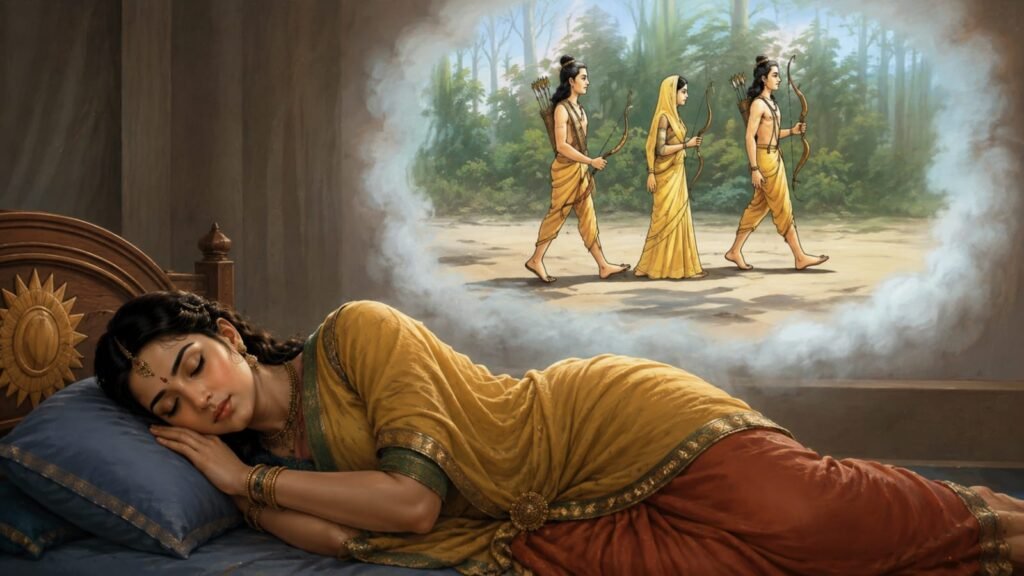
One of the most fascinating threads within this popular tradition involves Urmila, Lakshmana’s wife. According to later devotional narratives, when Lakshmana requested that Nidra Devi free him from sleep entirely, the goddess agreed only on the condition that someone else would accept his share of rest in his place. Urmila is said to have willingly taken on this burden herself, sleeping through the entire fourteen years while her husband remained awake in constant service of Rama.
This story presents Urmila as an equally selfless figure whose sacrifice, in many retellings, goes largely unnoticed beside her husband’s more visible devotion. While Lakshmana protected Rama and Sita openly in the forest, Urmila is described silently supporting that same mission through her own quieter act of devotion back home. For many devotees, her sacrifice represents the unseen strength and patience that so often sit hidden behind more visible acts of service and heroism.
It is important to note clearly, however, that this particular account is not explicitly found in the Valmiki Ramayana. The story of Urmila’s fourteen-year sleep belongs to later devotional traditions, regional Ramayana retellings, and oral folklore that developed around the epic over time. While it has become widely accepted and deeply loved within popular Hindu culture, scholars are careful to distinguish it from the earliest version of the Ramayana composed by Sage Valmiki himself.
The Spiritual Meaning Behind Lakshmana’s Sleeplessness
Whether understood literally or symbolically, the story of Lakshmana’s sleeplessness carries a genuinely profound spiritual message for readers today. Throughout the Ramayana, Lakshmana consistently places Rama’s wellbeing above his own comfort at every turn, demonstrating complete dedication, discipline, and selfless service without exception. The tradition of remaining awake for fourteen years, taken this way, comes to symbolize a devotee whose mind never once becomes distracted from serving the divine, regardless of personal cost.
Many spiritual teachers explain that Lakshmana’s wakefulness represents constant awareness and an unwavering commitment to dharma more broadly, beyond the literal question of sleep itself. Just as Lakshmana remained alert to protect Rama and Sita from external dangers in the forest, devotees are often encouraged, through this same story, to remain spiritually awake in their own lives, guarding themselves against negative thoughts, selfish desires, and moral weakness wherever they arise. Read this way, the story becomes more than simply a miracle to be accepted or doubted, it becomes a genuine lesson in inner discipline.
For this reason, the story continues to inspire devotees regardless of whether it is treated as a literal historical event or as a later devotional addition to the epic. It reminds readers that true devotion often requires real sacrifice, and that the greatest acts of service tend to be performed not for recognition or reward, but out of love, loyalty, and a quiet, deeply held sense of duty.
Did Lakshmana Ever Sleep Again?
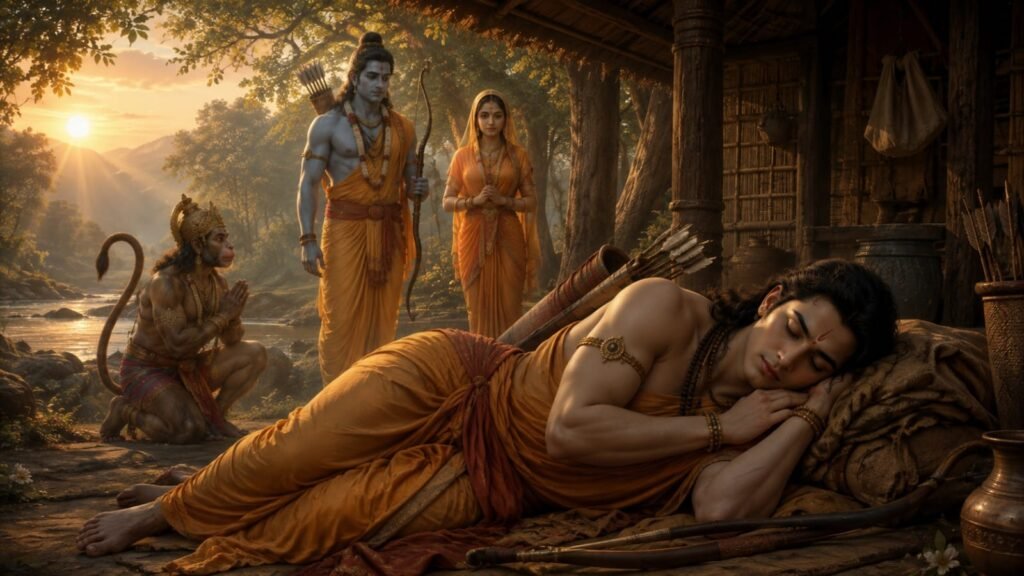
The original Valmiki Ramayana does not describe what happened to Lakshmana’s sleep after the fourteen years of exile came to an end, since it never explicitly states that he remained awake throughout that period in the first place. As a result, the question of whether Lakshmana eventually slept again simply is not addressed within the primary scripture at all. This distinction matters, since many popular retellings blend later tradition together with the original epic so seamlessly that the two can be difficult to separate without a closer look.
According to later devotional traditions, once Rama’s exile ended and the royal family finally returned to Ayodhya, Goddess Nidra is said to have restored Lakshmana’s natural sleep to him. Some regional retellings also describe Urmila waking after this same period, symbolizing the completion of both their individual sacrifices at once. These accounts are genuinely cherished across folklore and devotional literature, but they should not be mistaken for details found within the Valmiki Ramayana’s own narrative.
Whether taken literally or read symbolically, these later traditions consistently emphasize that every sacrifice made in service of dharma eventually finds some form of fulfillment. Lakshmana’s unwavering vigilance and Urmila’s quiet support together represent two distinct forms of devotion, and both are remembered with equal respect across Hindu tradition today.
Conclusion: Did Lakshmana Really Stay Awake for 14 Years?
The story of Lakshmana remaining awake throughout Rama’s fourteen years of exile is one of the most beloved traditions in Hindu mythology. However, a careful reading of the Valmiki Ramayana shows that the epic itself does not explicitly state that Lakshmana never slept during this period. Instead, it portrays him as a devoted brother who tirelessly protected Rama and Sita, consistently placing their safety and wellbeing above his own comfort, without ever making the more specific claim that later tradition would add.
The popular account involving Goddess Nidra and Urmila’s fourteen-year sleep comes from later devotional traditions and regional retellings rather than from the earliest version of the Ramayana. These stories have endured for so long because they express the depth of Lakshmana’s devotion, and Urmila’s quiet sacrifice alongside it, with a kind of emotional richness that adds real weight to an already inspiring character.
Ultimately, whether understood as literal history, as symbolism, or simply as devotional tradition, the story teaches a timeless lesson about selfless service, discipline, and unwavering loyalty. Lakshmana’s life reminds readers that true devotion is measured not by recognition or reward, but by a willingness to place duty above personal comfort, again and again, without complaint. That enduring message is very likely why his story, in all its retellings, continues to inspire devotees even now.
Frequently Asked Questions
Did Lakshmana really stay awake for 14 years?
The Valmiki Ramayana does not explicitly say that Lakshmana remained awake for all fourteen years. The story is found mainly in later devotional traditions and regional Ramayana retellings rather than the earliest scripture.
Why is Lakshmana believed to have never slept?
According to popular tradition, Lakshmana gave up sleep so he could guard Rama and Sita every night during their exile, a story often told to demonstrate his complete devotion and selfless service.
Who is Nidra Devi?
Nidra Devi is the personification of sleep in Hindu tradition. Later stories describe her granting Lakshmana freedom from sleep during the exile after he requested permission to remain awake.
Did Urmila really sleep for 14 years?
The story of Urmila sleeping for fourteen years is a well-known devotional tradition but is not explicitly mentioned in the Valmiki Ramayana. It appears instead in later retellings and oral traditions.
Why didn’t Lakshmana take Urmila with him into exile?
Lakshmana chose to accompany Rama into exile because he believed serving his elder brother was his highest duty during that period. Urmila is described supporting his decision with remarkable patience and quiet sacrifice.
What does Lakshmana’s sleeplessness symbolize?
Many spiritual teachers interpret Lakshmana’s wakefulness as a symbol of constant awareness, unwavering devotion, discipline, and complete dedication to dharma, beyond its literal meaning.
Which scripture mentions Lakshmana staying awake for 14 years?
The Valmiki Ramayana does not explicitly mention it. The story is primarily found in later devotional literature, regional Ramayana traditions, and oral folklore that developed afterward.
What lesson does this story teach?
The story teaches that true devotion often requires sacrifice, discipline, and placing the welfare of others before personal comfort. It also highlights Urmila’s often overlooked contribution, whose silent support became an important part of later Hindu tradition.
Have a question, suggestion, or story to share? Contact Mythovarta today and get in touch with our team.
Contact Mythovarta
📍Address:
Sector 3, Faridabad, Haryana
📞Call/WhatsApp: +91 83684 03905
📧 Email: mythovarta@gmail.com
Have a question about Hindu mythology, our articles, or a topic you would like us to cover? Contact Mythovarta today to share your feedback, suggest a topic, or get in touch with our team.